

The Parrish Car Accident & Personal Injury Law Firm | March 9, 2026 | Personal Injury
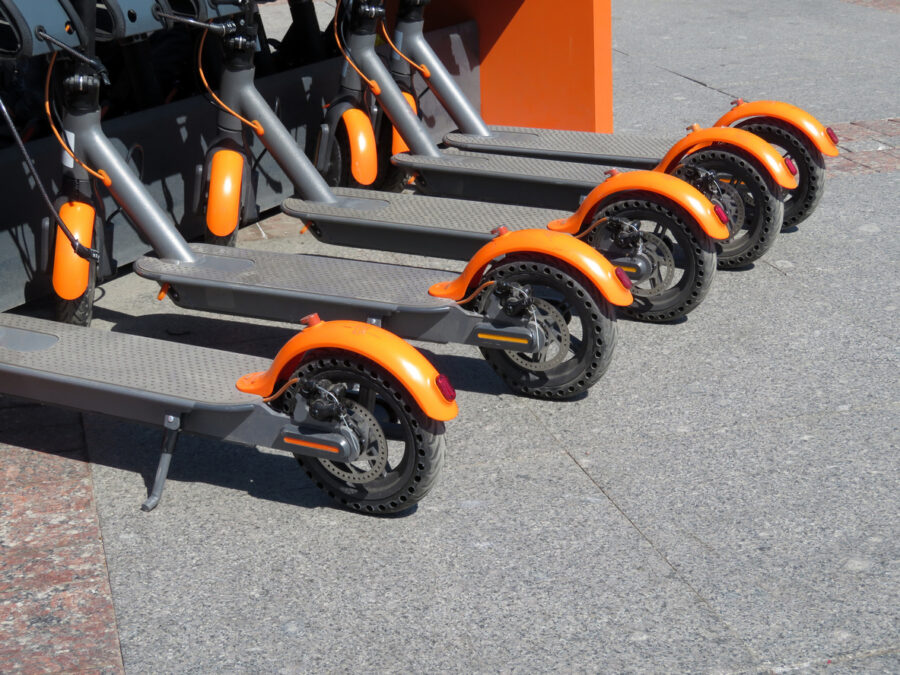
People often use the words scooter and moped as if they mean the same thing. In everyday conversation, that is common. Legally and mechanically, however, they are not always identical. In Virginia, including Fairfax, the difference between a scooter and a moped can affect licensing rules, registration requirements, and accident claims.
Understanding the difference matters, especially if you are riding one or were injured in a crash involving one.
What Is a Moped in Virginia?
In Virginia, the term moped has a specific legal definition. A moped is generally a small, low-powered motor-driven cycle that meets certain limits.
Under Virginia law, a moped typically:
- Has an engine displacement of 50 cubic centimeters or less (or limited electric power)
- Cannot exceed 35 miles per hour on level ground
- Has two or three wheels
- May have pedals, but pedals are not required
If a vehicle meets these criteria, it is classified as a moped, not a motorcycle.
What Is a Scooter?
The word scooter is more of a general term. It describes a style of motor-driven cycle with a step-through frame and a platform for the rider’s feet.
Scooters can vary widely in size and power. Some scooters meet Virginia’s definition of a moped. Others are much more powerful and legally classified as motorcycles.
For example:
- A 50cc scooter that cannot exceed 35 mph may be treated as a moped
- A 150cc or 250cc scooter is typically treated as a motorcycle
The engine size and speed capability determine the legal category, not the shape or appearance.
Licensing Requirements in Virginia
The difference between a scooter and a moped directly affects licensing. For mopeds in Virginia:
- A motorcycle endorsement is not required
- Riders must have a valid driver’s license or other DMV-issued authorization to operate a moped
- Registration with the DMV is required
- Insurance requirements may differ from motorcycles
For scooters classified as motorcycles:
- A motorcycle license or endorsement is required
- Full motorcycle registration applies
- Insurance is required
Riding a higher-powered scooter without the proper endorsement can result in fines or other penalties.
Registration and Titling Differences
In Virginia, mopeds must be registered with the Department of Motor Vehicles, but the process is different from motorcycle registration.
Moped registration usually:
- Does not require a title
- Provides a special registration plate
- Must be renewed periodically
Motorcycles, including larger scooters, require full titling and standard registration.
Insurance Considerations
Insurance requirements also depend on classification. For motorcycles and high-powered scooters:
- Liability insurance is required
- Minimum coverage limits apply under Virginia law
For mopeds:
- Insurance rules may differ
- Riders may not be required to carry the same coverage as motorcycle operators
Even when insurance is not legally required for a moped, having coverage can help protect against liability after an accident.
Safety Differences Between Scooters and Mopeds
Although mopeds and scooters may look similar, performance differences can affect safety. Mopeds are generally:
- Slower
- Less powerful
- Designed for short-distance travel
Scooters with larger engines are:
- Faster
- Heavier
- Capable of highway speeds
Higher speeds increase the risk of serious injury in a crash. Virginia law generally requires both moped and motorcycle riders to wear helmets, and riders should also consider additional protective gear to reduce the risk of serious injury.
Why the Difference Matters After an Accident
If you are injured in a crash involving a scooter or moped in Fairfax, the classification of the vehicle can affect the legal analysis.
Key issues may include:
- Whether the rider was properly licensed
- Whether the vehicle was legally registered
- Whether insurance coverage applies
- How fault is assigned
For example, if a scooter is legally a motorcycle but the rider does not have a motorcycle endorsement, that may complicate liability or insurance claims.
Traffic Rules and Road Use
Both mopeds and scooters must follow Virginia traffic laws. However, there may be limits on where mopeds can be operated. In general:
- Mopeds may be restricted from certain high-speed highways
- Scooters classified as motorcycles may use highways if properly licensed
Checking local Fairfax ordinances and Virginia state rules is important before riding.
Contact The Parrish Car Accident & Personal Injury Law Firm To Schedule a Free Consultation With a Fairfax Personal Injury Lawyer
The main difference between a scooter and a moped in Fairfax, Virginia, comes down to engine size, speed capability, and legal classification. A moped is typically limited to 50cc and 35 mph, while a scooter may range from low-powered to full motorcycle status depending on its specifications.
Knowing how your vehicle is classified affects licensing, registration, insurance, and legal responsibility. If a crash occurs, that classification can also influence how a personal injury claim is handled. For help, contact The Parrish Car Accident & Personal Injury Law Firm for a free consultation.
The Parrish Car Accident & Personal Injury Law Firm Manassas
9208 Lee Ave, First Floor, Manassas, VA, 20110
(571) 229-1800
Open 24/7
Our firm is located near you. We have an office in Manassas
Find us with our GeoCoordinates: 38.7523907,-77.5566859
The Parrish Car Accident & Personal Injury Law Firm Fairfax
4000 Legato Rd #1100, Fairfax, VA, 22033
(571) 200-5424
Open 24/7
Our firm is located near you. We have an office in Fairfax
Find us with our GeoCoordinates: 38.8657713,-77.3652474