

The Parrish Car Accident & Personal Injury Law Firm | June 5, 2026 | Car Accidents
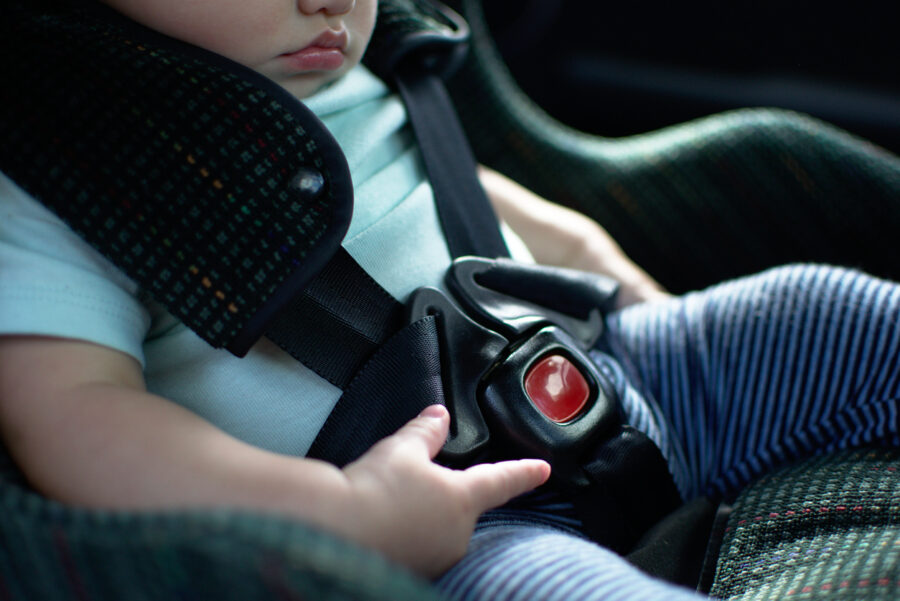
As children grow, many parents start asking the same question: When is my child old enough to sit in the front seat? Moving out of a car seat or booster seat often feels like an important milestone. However, before making the switch, it’s important to understand Virginia’s child passenger safety laws and what safety experts recommend.
While Virginia law addresses child restraint requirements, parents should also consider the risks associated with front-seat travel. Knowing the rules can help you make informed decisions that protect your child every time you get behind the wheel.
What Are Virginia’s Child Car Seat Requirements?
Virginia law requires children to be properly secured in a child restraint device until they reach their eighth birthday. The restraint system must be appropriate for the child’s age, weight, and height and installed according to the manufacturer’s instructions.
Depending on a child’s size and developmental stage, this may include:
- A rear-facing car seat
- A forward-facing car seat with a harness
- A booster seat
- A standard seat belt
Even after a child turns 8, parents should ensure that the vehicle’s seat belt fits properly before transitioning away from a booster seat.
Can a Child Legally Sit in the Front Seat in Virginia?
Virginia does not have a specific law that sets a minimum age for riding in the front seat. As long as a child is properly restrained, state law does not prohibit them from sitting there. However, legal and safe are not always the same thing.
Most safety organizations, including the American Academy of Pediatrics, recommend that children remain in the back seat until at least age 13. These recommendations are based on decades of research showing that the back seat is generally the safest place for young passengers.
Why Is the Back Seat Safer?
The back seat provides additional protection during many types of crashes, particularly frontal collisions.
One of the biggest concerns is the front passenger airbag. Airbags are designed to protect adults, but they deploy with tremendous force. For younger children, that force can cause serious injuries to the head, neck, chest, and face.
Children are also more vulnerable to injury because their bodies are still developing. Their bones and muscles are not as strong as those of adults, making them more susceptible to severe injuries in a collision.
Simply put, the farther a child is from the dashboard and front airbags, the safer they are likely to be.
When Is a Child Ready to Ride in the Front Seat?
For most families, the safest approach is to wait until a child is at least 13 years old before allowing them to ride in the front seat regularly.
Even then, parents should make sure the seat belt fits correctly. A properly fitted seat belt should:
- Rest low across the hips and upper thighs
- Cross the middle of the chest and shoulder
- Stay away from the neck and face
If the shoulder belt cuts across a child’s neck or the lap belt rides up on the stomach, the child may still need a booster seat.
Parents should also move the front passenger seat as far back as possible to increase the distance between the child and the airbag.
Additional Tips for Keeping Children Safe in the Car
Even after your child transitions to a booster seat or regular seat belt, following a few simple safety practices can help reduce the risk of injury.
Consider the following tips:
- Keep children rear-facing for as long as the car seat manufacturer allows.
- Use a forward-facing seat with a harness until your child exceeds the seat’s height or weight limits.
- Continue using a booster seat until the seat belt fits properly.
- Make sure every passenger wears a seat belt on every trip.
- Replace any car seat involved in a moderate or severe crash.
- Have your car seat inspected if you are unsure whether it is installed correctly.
Many communities offer child passenger safety inspections where trained technicians can verify proper installation.
Call The Parrish Car Accident & Personal Injury Law Firm for a Free Consultation With a Fairfax Car Accident Lawyer
Few experiences are more frightening for a parent than seeing their child hurt in a car accident. While understanding Virginia’s child passenger safety laws can help reduce risks, it cannot prevent every crash caused by a careless driver.
If your child was injured in a collision in Fairfax or anywhere in Northern Virginia, The Parrish Car Accident & Personal Injury Law Firm is here to help. Our team understands the challenges families face after a serious accident and is committed to helping injured children and their parents pursue the compensation they need to move forward.
For more information, please contact our experienced Fairfax car accident attorneys at The Parrish Car Accident & Personal Injury Law Firm to schedule a free consultation today. We have two convenient locations in Manassas and Fairfax, Virginia.
The Parrish Car Accident & Personal Injury Law Firm Manassas
9208 Lee Ave, First Floor, Manassas, VA, 20110
(571) 229-1800
Open 24/7
Our firm is located near you. We have an office in Manassas
Find us with our GeoCoordinates: 38.7523907,-77.5566859
The Parrish Car Accident & Personal Injury Law Firm Fairfax
4000 Legato Rd #1100, Fairfax, VA, 22033
(571) 200-5424
Open 24/7
Our firm is located near you. We have an office in Fairfax
Find us with our GeoCoordinates: 38.8657713,-77.3652474